Live and in-person

Navigating a bog in the BWCAW

The BWCAW in fall

I will be talking about canoeing the St. Croix River, the Boundary Waters Canoe Area Wilderness, and who knows what else tomorrow morning at the Midwest Mountaineering Spring Adventure Expo as part of a panel discussion about “water trails” organized by Dave Simpkins of MN Trails magazine.

The discussion will be from 11:45 a.m. to 12:45 p.m. and will be held across the street from the store at the University of Minnesota’s Hansen Hall, Room 104. All the details are available here.

On a related note, I am very happily sporting a small blister on the palm of my hand today from paddling on the St. Croix last night, much of it upstream, while pursuing white bass.

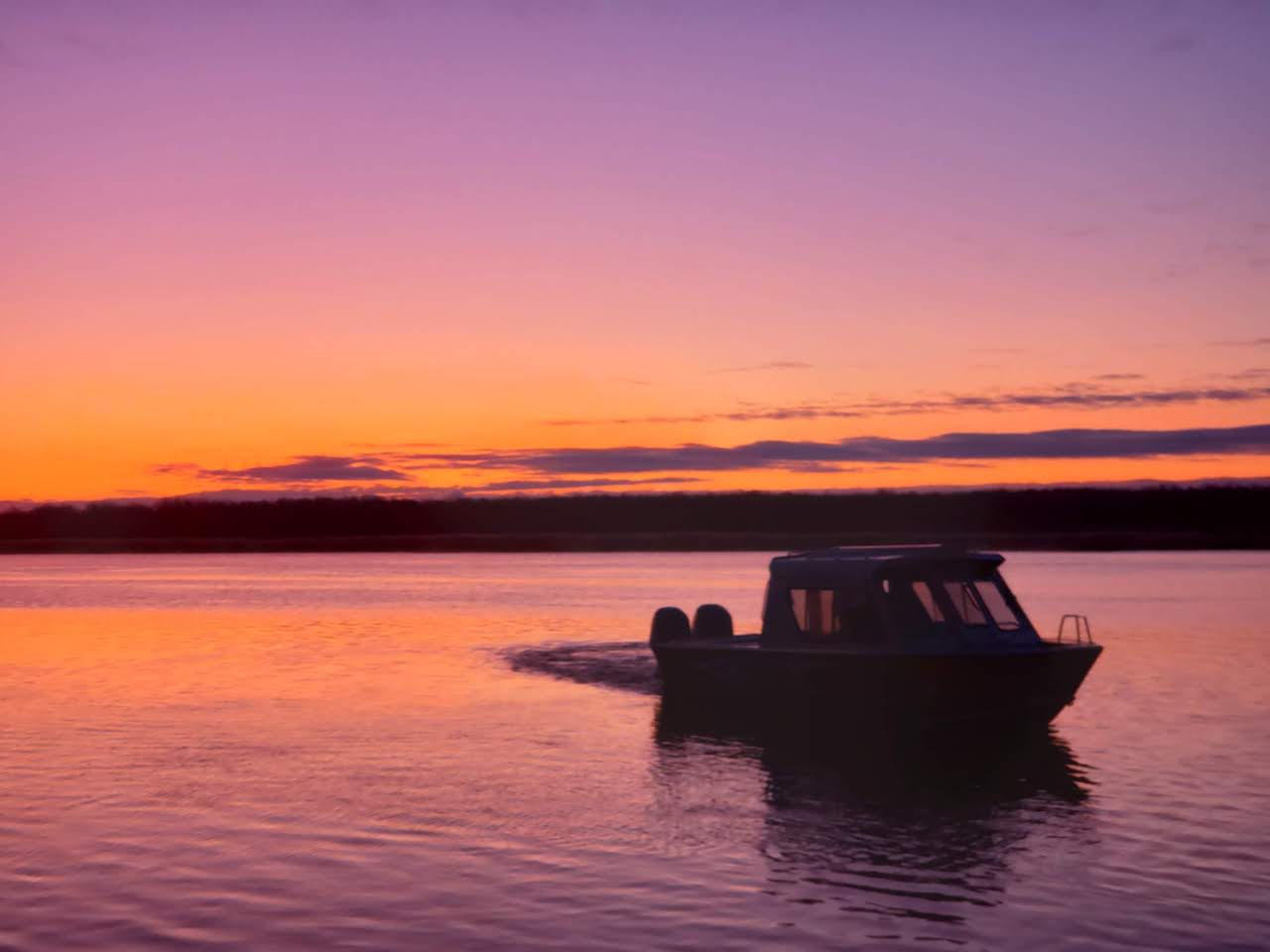
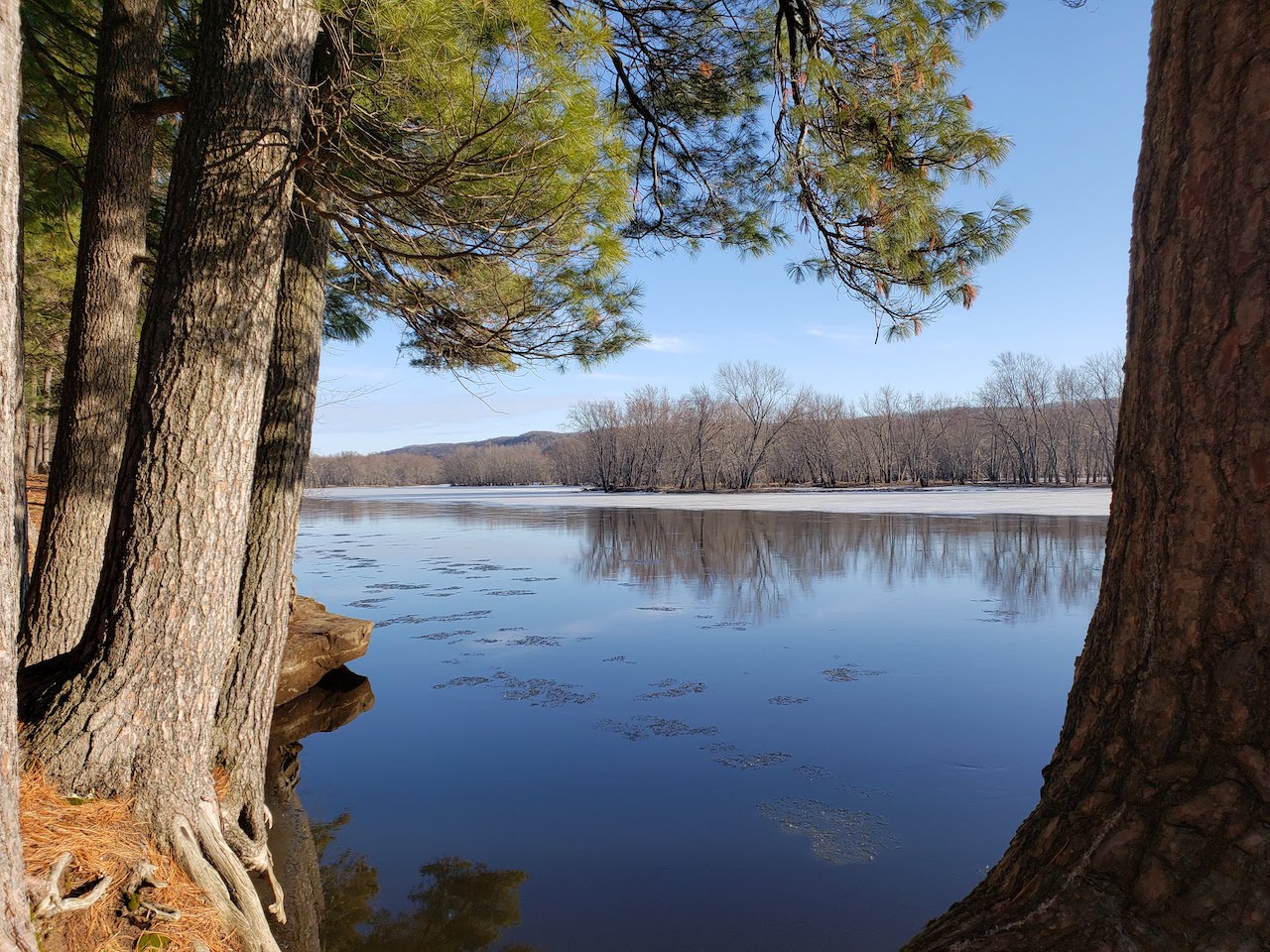
Although my companion brought a good number of fish to the boat, I did not. But, we did hear raucous sandhill cranes, geese, turkeys, and more. We also fished until almost dark and I watched one bright planet’s reflection on the water over the silhouetted reflection of the white pines on the Minnesota shore as we paddled.

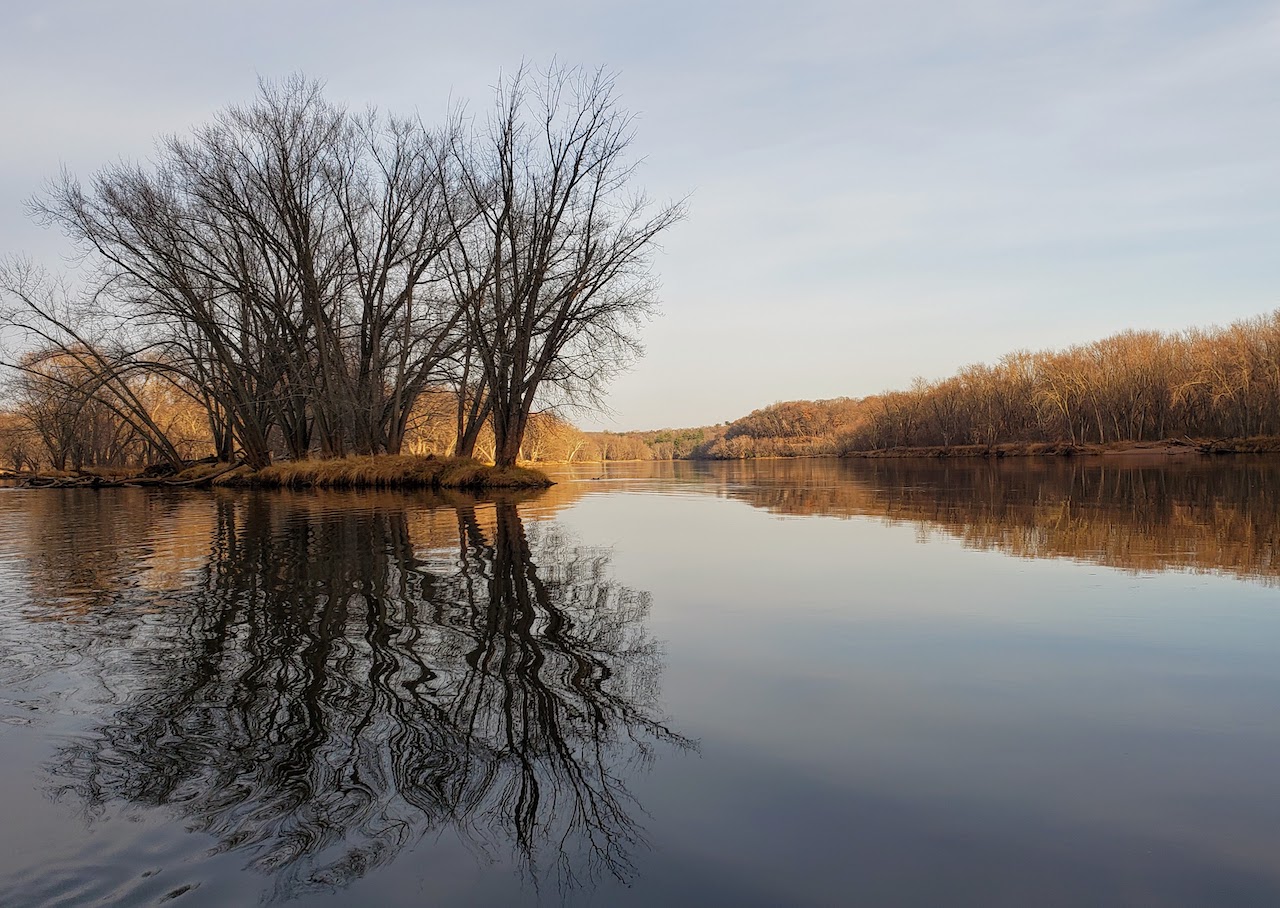
The St. Croix as the sun sets over the bluffs.

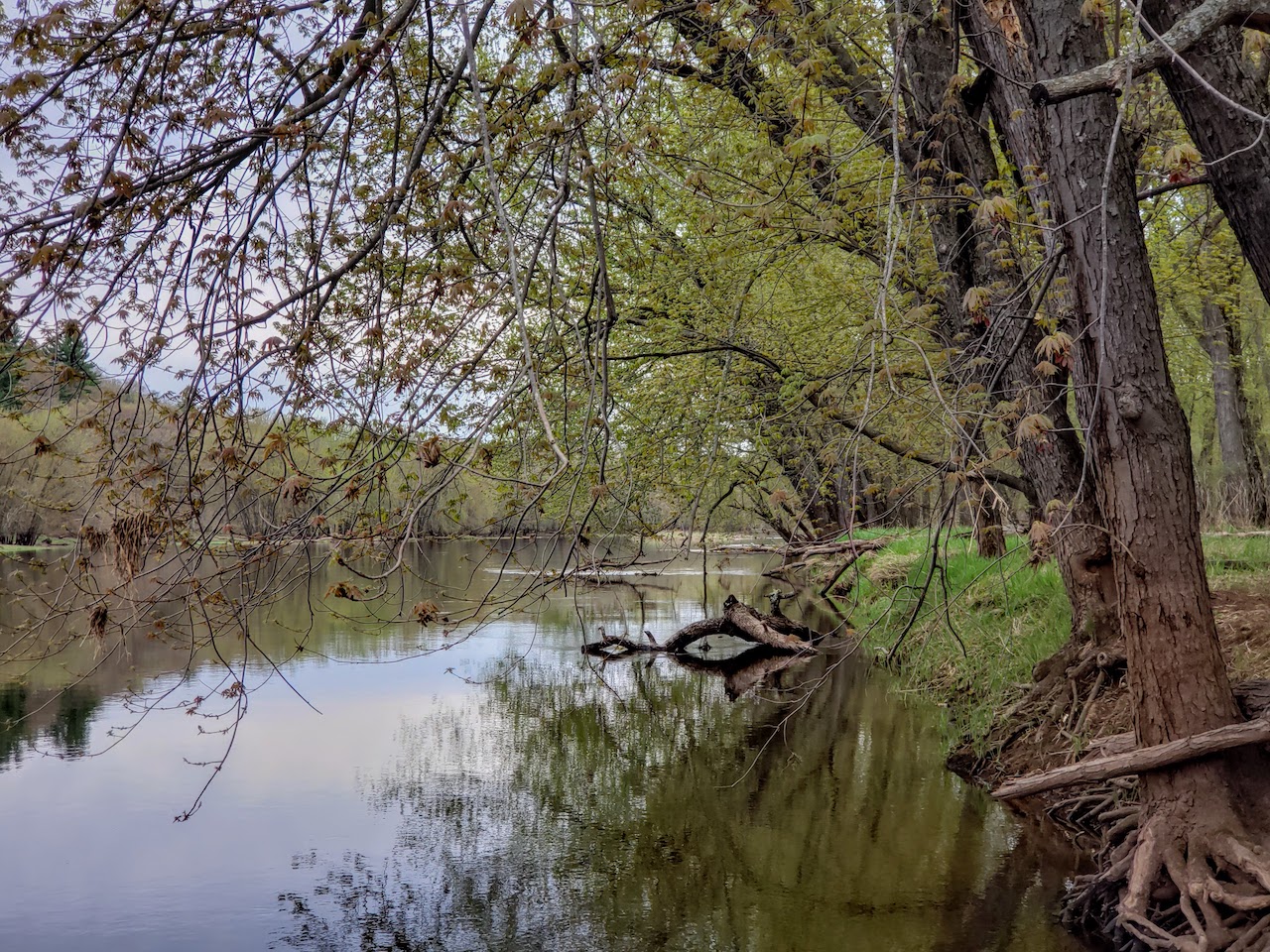
The St. Croix in spring


St. Croix River Week coming this July

A canoe rests on the shore of a narrow island

July, upper St. Croix River

“The assaults on the St. Croix watershed by development, run-off and loss of habitat, put at risk the river we protected 40 years ago. Without a renewed commitment, we could lose the most unique Wild and Scenic River in the nation. Our challenge is to act.”

- Walter F. Mondale

I received the following information from the St. Croix River Association about a big effort they are organizing this summer. Read through it and then please consider my questions below about how the online community might participate! Leave your ideas in the comments.

The St. Croix River Association is coordinating a 2010 St. Croix River Awareness Week, July 17-25, 2010.

The goal is to provide members of the St. Croix River Association and the community at large opportunities to engage cooperatively in intergenerational service projects for the sake of building a strong community of watershed stewards and restoring the health and beauty of the St. Croix River and its watershed. We hope to reach into every tributary.

Objectives are to:

  • Inspire stewardship action through role modeling
  • Offer hands-on participatory projects where people of all ages can feel empowered to take action and ‘make a difference’
  • Raise awareness of the state of the river and the watershed from source to mouth of the St. Croix River
  • Teach best practices for healthy water quality
  • Build awareness of how our actions on the land affect watershed health and the scenic quality of the Riverway
  • Educate people about efforts to monitor, inventory, and scientifically study the river and its environs
  • Celebrate the natural environment

You are invited to develop an event for your organization and yourself. Let the River Association know about it and we will publish it on our website and in our media releases.

I’d love to see the folks of the St. Croix River Facebook page, this blog, and other online communities come together dynamically and do something to participate in this effort. Let’s hear your ideas in the comments!

It’s important to note that a river is a narrow ribbon of water moving across the landscape, but it is so much more. It is also the vast tracts of land containing the streams, ponds, lakes, wetlands, springs, and other watery elements that ultimately join the river’s flow. This interactive map of the St. Croix River basin might be useful in thinking about the whole watershed:


View View larger map


Defined by life

Eaarth, by Bill McKibben

This morning, Bill McKibben stood in the pulpit at the church that Katie and I have been going to for a few months. The author and climate change activist gave a brief talk–not a sermon–about where things stand with climate change and the work to do something before it’s too late.

McKibben is the founder of an effective and respected advocacy organization called 350.org. Last October 24, they organized what CNN called the “the most widespread day of political action in the planet’s history,” comprised of 5,200 actions in 181 countries. McKibben’s 1989 breakthrough book, “The End of Nature,” was originally published serially in the New Yorker when he was a staff writer there.

One thing I learned was the origin of the “350″ thing. It’s quite simple. In 2008, NASA scientists published a paper saying that 350 parts per million of CO2 in the atmosphere is the breaking point for global warming:

If humanity wishes to preserve a planet similar to that on which civilization developed and to which life on Earth is adapted, paleoclimate evidence and ongoing climate change suggest that CO2 will need to be reduced from its current 385 ppm to at most 350 ppm, but likely less than that.

- James Hansen, et al, Target atmospheric CO2: Where should humanity aim?, 2008

McKibben briefly covered much of what has been most widely discussed: the big, noticeable effects of global warming, like the melting Arctic and the vanishing polar bears. He warned that the climate bill that will be introduced in the U.S. Senate in 10 days by Sen. Kerry and others might as well have been written by the electric utility industry, is full of loopholes, and simply will not arrest the accelerating progress of global warming.

As far as President Obama’s actions, he paused at length and then said that Obama has done more on climate change than any previous President. Then he said that he had also drunk more beer than his 12-year-old niece.

I have lately been frustrated that the problem with a lot of environmental work is that there simply are too many humans. Other efforts can feel like treating the symptom, and not the cause. I got a kick out of the Center for Biological Diversity’s campaign of handing out condoms on Valentine’s Day with illustrations of endangered species printed on them.

Polar Bear condom package

The question of population growth was the first question put to McKibben after the service and he responded with some surprising information. He said that fertility rates are dropping and the planet’s population is expected to top out at about 9 billion in 20 or 30 years, I think. He said that obviously 9 billion is beyond the carrying capacity of the planet, but there is a bit of a fertility bubble right now and birth rates will soon start to slow.

McKibben then repeated something that I’ve been hearing more and more about lately, which is that programs that seek to educate and empower women in societies around the globe are proving remarkably effective at slowing population growth. Once women have options beyond just having a bunch of kids, they go from having six to maybe two. He also said that he is the proud parent of one child.

The population argument is also somewhat inconsequential because people in countries like the United States where birth rates are relatively low consume so much more of everything–including energy–than people in developing countries where birth rates might be higher. An American family uses as much energy between midnight on New Year’s Eve and dinner on January 2 as a Tanzanian family uses in a year.

People forming "350" in India

Hundreds of students at "Tiger Fest" in India call for 350 in order to protect endangered species like the tiger. (350.org)

There’s a lot of hype out there regarding climate change. McKibben impressed me as someone who had given a lot of information and theory and science a long, dispassionate examination, and was now very passionate about spreading what he had learned. He was in Minnesota for less than 24 hours, landing last night and catching a flight right after the second service. He speaks again tomorrow night in Portland, Oregon and the next night in Seattle. In fact, his touring schedule would put just about any rock and roll band to shame.

McKibben has a new book out, which also explains the furious tour. It’s called “Eaarth: Making Life on a Tough New Planet” (the second “a” in “Eaarth” is not a typo, the author said to “channel your inner-Schwarzenegger” when pronouncing it).

Wooded pasture

Our friends Brian and Rachel joined us for the service and we had breakfast afterward, then Katie and Rachel left to do some “crafting” and Brian and I ran an errand or two and then went back to our house, where we had a few cups of Oolong tea and played a game of chess. The sun was spilling in the bay window and the view to the lake was starting to be obscured by the burgeoning green on the trees.

We weren’t sure what to do with ourselves and the beautiful afternoon and decided to try to the samurai method we had been discussing earlier, which was that any major decision can and should be made in the length of time it takes to drink a cup of tea. We had a few cups of tea–I recently read that Oolong is considered to be best after three or four steepings (it’s on Wikipedia, it must be true!)–and considered our options as we played.

Red pines on the banks of a lake

We talked about the game a bit, again visiting on the idea that it is so enjoyable and endlessly complex, and also that it is a perfect distillment of war. But later I got thinking and realized it’s completely inaccurate in regards to war because in chess, the two sides start out perfectly equal, as far as numbers of soldiers, equipment, and resources.

What war has ever been fought between two perfectly equal forces? Underdogs can and often do win, but the very imbalance of the opposing forces and how their leaders respond to their own and their enemy’s strengths and weakness is the true test of a strategic mind.

Birch tree branches and pale spring leavespale

About the time we were drinking our third cup of tea and finishing up the game, I decided that some part of me wanted to get into Wisconsin. We packed up the dog and some provisions and pointed the car east. The iPod provided the Black Keys, Gorillaz, and lots more, but the music had to compete with the wind rushing in open sunroof and windows.

When we crossed the St. Croix, I figured out where I wanted to go and we navigated to a little county park with a lake where we had gone to swim and canoe and fish a few times in the past.

Speed limit 10 mph sign with wooded bluff in the background

The gate was locked across the road when we got the park, but that actually proved to be fortunate. There were a few other cars parked there so we joined them and set off walking up the road and into the park. It’s not a big park and if we’d driven in we might not have gotten much of a walk. And, in this season of so many ticks, walking on the road was frankly sort of relieving.

The road climbed a big hill through dry grassy hills and I felt like we were walking in some parks I remember in western North Dakota. Lola ran ahead, checking out the tops of the hills on both sides of us. After reaching the top, we were able to see the valley to our right where there were a couple horse farms nestled in between the ridges and not much else around. It exceeded my arbitrary aesthetic standards. It looked like heaven, really.

A horse grazes on a Wisconsin farm with budding and blooming trees around it.

Although I thought we would just walk on the road down to the lake where Lola could swim, we spotted a trail that headed that way and decided to check it out. It was a beautiful trail which wound down the hill through woods, primarily planted red pine, which I can’t help having a fondness for.

The trail was beautifully-constructed; often it was inexplicably carpeted in moss. Rocks and timbers had been well-placed and erosion-preventing waterbars had been placed generously. The trail slowly cut down the hills sideways and soon, the lake began to appear shimmering through the woods. It is a cold, clear lake not open to motors and is home to stocked rainbow trout and the biggest largemouth bass I’ve ever caught.

Turquoise water in a Wisconsin lake

Down at the lake, Lola finally got to swim. She had been driving for the water from the moment it came in sight and one could feel her happiness when she finally plunged in.

There were some other folks fishing around a bend, but otherwise there was no one around. We took a break at a picnic table in the shade before heading back up and a loon splashed around on the lake and called one short call while we sat and watched the water.

Wooded hillsides

Perch Lake seen from above on a hill

A moss-covered hiking trail


Dragonflies and amphibians

It rained this afternoon and evening. Of course it started about halfway through the Twins’ second-ever baseball game in the new–roofless–Target Field. The game went on, and the Twins lost to the Red Sox.

More than any previous showers yet this spring, this rain brought the green. The trees had all been mostly budded out in the past couple days, and this rain made everything explode. It smelled like life as I drove home from work; I put the window all the way down and almost found myself sticking my head out a little bit to get my nose in the breeze.

It hasn’t rained for several hours but it is still damp out, a humidity seeming to have remained. Katie said she saw a dragonfly when she took Lola for a walk earlier.

When I took the dog out just now, there was a big frog (or toad? anybody? class?) sitting on our front steps. It was bigger and prettier than any I’ve seen around here in a while. He was on the first step and looking up at the next two toward the door. Not sure where he thought he was going. I got Katie and she helped me take some photos.


Canoe trip report: 2010 Waterfowl Harassment Tour

The annual early spring canoe outing has been thus dubbed with its name because the most consistent memory from year to year is pairs of ducks fleeing the canoe every hundred yards or so. The group this year was my lovely ladies Katie and Lola, Katie’s good friend Emily who was visiting from Madison for the weekend, and Gabe, who kayaked solo, seeking out the white bass which are decent early spring fly fishing targets, but difficult to locate.

The shy wood ducks are particularly vexed by our presence, and they burst from their hiding places near the bank, sometimes making quiet keening cries as the mated pairs fly low and fast off down the river. In comparison, the Canada geese stay put as long as they can stand it, swimming slowly ahead of us, honking mightily, until finally taking flight in a great loud event with water splashing and the big birds rising laboriously into the sky, only to circle overhead until we pass, and then returning to the water, and most likely their nests concealed on the bank.

The capable craft waits patiently for us to take back to the water after a pit stop

The capable craft waits patiently for us to take back to the water after a pit stop

Gabe pointed out that in addition to the birds’ protective instincts for their nests at this important time of year, the last time they passed through was in the fall, and they probably got shot at much of their way through here. I can understand the skittishness.

    Gabe drifts with the current, scoping for elusive spring top-water fly fishing opportunities.

Gabe drifts with the current, scoping for elusive spring top-water fly fishing opportunities.

All the birds were out en masse, including a never-ending chorus of warblers, wrens, sparrows and what all from the banks. This day there weren’t quite the number of avian voices that I’ve heard previous years, but with how abnormal the spring has been, it’s a miracle that any of these typical seasonal events and experiences were occurring normally.

Green haze on the backwater bluffs.

Green haze on the backwater bluffs.

The highlight of the trip is always the Great Blue heron rookery about half-way down. If the timing is perfect, the birds are on their nests when the water is still really high and you can actually paddle right through the island, the big, gangly herons flapping and flopping on their nests, far up in the crowns of the trees. That wasn’t possible today, but we still got a great view as we drifted past the island. There were probably 50 or more nests visible.

Great blue herons nest in colonies. A bald eagle flew slowly over the island as we passed, and one understood why strength in numbers might be desirable.

Great blue herons nest in colonies. A bald eagle flew slowly over the island as we passed, and one understood why strength in numbers might be desirable.

A heron sits on its nest in the top of a tree.The water was up a little bit still, but only a foot or two above its usual summer levels. It made finding places to get out of the canoe a little challenging, but otherwise it was ideal for paddling. The current was still moving pretty good and we actually paddled very little most of the time, just doing so when we needed to maneuver around a tree in the water or some other obstacle.

My canoe full of two ladies and one bitch. All of whom I love.

My canoe full of two ladies and one bitch. All of whom I love.

Besides the steady background birdsong, the day was remarkably quiet. At various points, conversation, paddling and the wind died down and we drifted in wondrous silence, the kind that makes you feel healthy and whole. During those moments, I was reminded why, despite paddling this stretch at least a couple times a year, I never tire of coming back to it.

Lola rests her tired head on Katie's leg.Just below the rookery, the backwater we had been traveling re-joined the main river and we proceeded down a long straightaway with a pretty limestone bluff on one side and the railroad swing bridge ahead. A few boats were fishing under and around the bridge.  We stopped on a beach a hundred yards downstream and ate sandwiches, looking back upstream at the valley we had already come through.

The railroad swing bridge in spring, with leafless hardwoods and dark green White pines on the bluff behind it.

From that point, it wasn’t far down to the take-out. The river winds through a narrow channel with rocky banks that is a favorite spot for us to target smallmouth during the summer. Then it opened up into the broad valley again and we paddled steadily, moving with the current past the sunny banks.

Sun through leafing out tree branches.


Page 11 of 27« First...910111213...20...Last »