Dying for democracy

Below is a letter-to-the-editor that I wrote which was published in this week’s Hudson, Wisconsin Star-Observer:

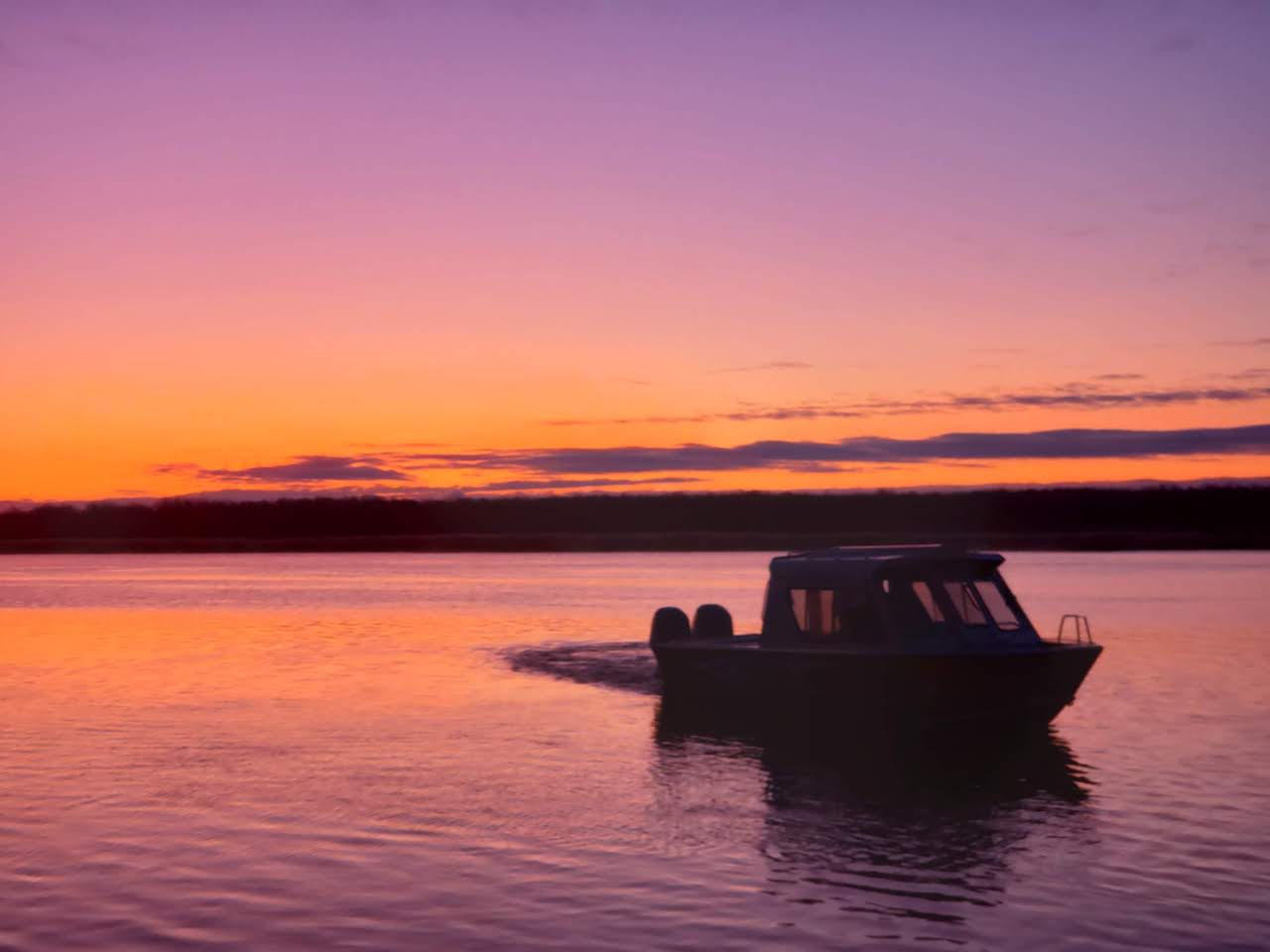
Memorial Day skiesDear Editor,

My wife Katie and I have been attending the Memorial Day celebration at Willow River Cemetery for several years. This year, we were made to feel unwelcome and we won’t attend again.

The event started well enough. We put our hands over our hearts and sang the “Star-Spangled Banner.” We stood solemnly as a prayer for the war dead was offered. Then the keynote speaker took the stage, a young man who had served a tour of duty in Iraq with the Wisconsin National Guard.

His remarks started off well enough, but soon descended into the sort of divisive, partisan language one finds on 24-hour cable news channels. He proclaimed that, to thank veterans, we should stand against health care reform and for the idea that we are a Christian nation.

At that point, I walked away. I strolled through the cemetery on that beautiful summer morning, admiring the bright flags flying over many graves, thinking of the many who have fought, and the many who have died. For a while, I could still hear the speaker’s voice, but not his words. Even unable to make out what he was saying, it sounded just as empty.

I came back to the ceremony in time to see the Honor Guard of veterans stand and deliver the 21-gun salute. I thought of my father who served in the Navy, of Katie and my grandfathers, who joined up during World War II, and of a good friend who will leave for the war in Afghanistan this winter.

The speaker’s words were of politics, not of memorial. It assigned political ideology to thousands of dead heroes, who sacrificed their lives for any number of reasons. Chief among those reasons was surely the ideal of democracy. His words cheapened their loss and the day, and sought out the things that divide us on a day we should all stand together.

Sincerely,
Greg Seitz
Maplewood, MN

- “Disliked Memorial Day speech,” June 4, 2010

St. Croix Valley parks launch family event summer series

Get off the sofa!

A coalition of the National Park Service and state parks on both sides of the St. Croix River have announced a series of events this summer meant to get families out and enjoying everything the St. Croix has to offer.

Every Sunday, all summer long, the Summer Outdoor Family Adventure Series (SOFAS) will present activities like picnics, hikes, canoe trips, and train rides; participants will learn about history, birds, plants, conservation, and more.

You and your family (all events are suitable for children 10 and up, with every other event suitable for 6 and up) can simply check out one or more of the 15 events, or get more involved and fill out a passport book while attending events. Those who have seven or more activities at the end of the summer will get a pin.

All the events, and the pin, are free. (State Park admission not included.)

Schedule:

  1. SOFAS Kickoff – Osceola Landing
    Sunday, June 6, 4:00 to 6:00 p.m.
    Looking for a fun family time? Bring a picnic to Osceola Landing, pick up a passport book, and learn about SOFAS! Through ongoing activities, meet some of the local experts who will lead your SOFAS adventures.
  2. Hike Along the Ridge – Ridgeview Trail
    Sunday, June 13, 5:00 to 6:00 p.m.
    Join a National Park Service Ranger to hike a 1-mile loop and hear about the changing Northwoods landscape while walking through a geologically unique area overlooking the river valley.
  3. Just Take a Hike! – Straight Lake State Park
    Sunday, June 20, 4:00 to 5:30 p.m.
    Discover the wildflowers, wildlife, and unique features of Straight Lake State Park on a leisurely walk this Father’s Day!
  4. All Aboard! The Railroad Trail – MN Interstate State Park
    Sunday, June 27, 4:00 to 5:00 p.m.
    All aboard! Take a walk back in history as we explore the Northern Pacific railroad that once connected Taylors Falls “to the rest of the world”. What happened and what remains? Find out on this 2 mile leisurely walk.
  5. Old Fashioned Train Ride – William O’Brien State Park
    Sunday, July 4, 10:30 a.m. to 3:30 p.m.
    Join us for this fun, unique experience on the rails. This event involves a 1-mile hike, and opportunities to get off the train to shop. The cost is $15.00 for adults, $10.00 for kids under 16, and children under 4 ride free. Call (651) 433-0500 x227 for more details.
  6. Back in Time: Boomsite Tour – Stillwater Boomsite
    Sunday, July 11, 4:00 to 5:00 p.m.
    Go back in time as we explore the place that once employed hundreds of sawyers, teamsters, bank beavers, and river pigs and learn about the log jams that made this river famous! Meet at the council ring at the rest area.
  7. Indianhead Flowage Trail
    Friday, July 16, 5:00 to 6:00 p.m.
    Crossing bridged streams and winding through the woods and wetlands, join us on this leisurely walk to discover this treasured spot amongst the St. Croix Valley.
  8. Camp We-Kan-Tak-It Play and Auto Tour – WI Interstate State Park
    Saturday, July 17, 10:00 a.m. to noon
    Celebrate the 75th anniversary of the Civilian Conservation Corps that built our state parks while being entertained by this enthusiastic group of actors!
  9. Bringing Back the Bluebirds! – Willow River State Park
    Sunday, July 18, 4:00-5:00 p.m.
    Dive into the life of a bluebird as we take a sneak peek inside a few of Willow River’s blue bird boxes.
  10. Twilight Canoe Paddle –Interstate State Parks to Osceola Landing
    Sunday, July 25, 6:00 to 9:00 p.m.
    Discover nature by night and enjoy the river under the full moon! Bring or rent your own canoe or kayak and join us on this one-way leisurely 7-mile paddle.
  11. Standing Cedars State Natural Area
    Sunday, August 1, 4:00 to 5:00 p.m.
    Uncover the hidden treasures of this protected piece of land; why it was established, what’s happening now, and what it means to you.
  12. Double the Adventure: Hike and Paddle – Straight Lake State Park
    Sunday, August 8, 4:00 to 6:00 p.m.
    We’re amping up our adventure now! Join us for a dual hike and paddle through the secluded parts of one of Wisconsin’s most beautiful parks.
  13. Little Walk on the Prairie – Wild River State Park Trail Center
    Sunday, August 15, 4:00 to 5:00 p.m.
    From washed-out riverbeds to hardwood forests, the prairies have been restored! Walk through the 5-foot tall big bluestem as we discover the plants, animals, and insects that have returned to this area.
  14. Trumpeter Swan Banding – Crex Meadows Wildlife Area
    Sunday, August 22, 4:00 to 5:00 p.m.
    Join trumpeter swan experts to discover the fascinating history, beauty, survey techniques, and conservation status of the trumpeter swan all while getting an up-close look at these majestic migrating birds.
  15. Club Wrap-up and Awards – Osceola Landing
    Sunday, August 29, 4:00 to 6:00 p.m.
    Conclude our summer together with ongoing activities, a picnic, and awards ceremony for our SOFAS participants!

Download the schedule and brochure as a PDF »

Brought to You By:

  • National Park Service
    St. Croix National Scenic Riverway
    Dale Cox, Park Ranger
    (715) 483-2272
  • Wisconsin State Parks
    • Wisconsin Interstate State Park
      Julie Fox, Natural Resources Educator
      (715) 483-3747
    • Crex Meadows Wildlife Area
      Alison Cordie, Natural Resources Educator
      (715) 463-2739
  • Minnesota State Parks
    • William O’Brien State Park
      Diane Hedin, Interpretive Naturalist
      (651) 433-0500 x227
    • Wild River State Park
      Kacie Carlson, Interpretive Naturalist
      (651) 583-2925

Thanks to the St. Croix River Association for passing this information along!

How to start your summer

The St. Croix and its valley.Memorial Day weekend is just a few days away; it’s when summer gets real in Minnesota. The holiday really sneaked up on me this year, but that’s how summer is.

Soon, the blur and bustle of the season will be the only existence imaginable. A blast of hot and humid weather starting last weekend was a wake-up call that the season is underway, and I started thinking about how Minnesotans will celebrate the weekend.

I just posted an article over at Minnesota Trails magazine about great opportunities this weekend in our state’s many great parks:

Everyone knows that Memorial Day weekend marks the start of summer in Minnesota. The current blast of hot and humid weather has gotten a lot of folks pulling out the shorts and sandals, and looking for ways to enjoy our state’s great outdoors.

We’ve picked some of the most promising events and opportunities for fun scheduled in Minnesota’s state parks and trails this holiday weekend.

Whether you’re looking to learn about nature or history, or walk through the woods looking for birds, or even just get some pancakes, we’ve got something for you.

Memorial Day is not just an extra day off work, of course. It’s also a solemn holiday for all the brave Americans who have made the ultimate sacrifice for our country. Take a moment while you’re enjoying the parks and trails this weekend to remember those that never got the chance to, so you could.

I still don’t quite know what I’m going to do with myself this weekend, but I’ve certainly got a few ideas. Head on over to the magazine’s website for seven interesting events at parks around the state, as well as a special bonus featuring some paddling opportunities!

Roam rhymes with home

This path was made for walking.

Near the 1850s Point Douglas-Superior Military Road, Wild River State Park

There is a concept that I’ve struggled to state clearly in the past about home, but I have come to this: It is home because I love it; I love it because it is home.

The author and theologian Tony Jones lives in Edina, Minnesota, two blocks from his childhood home. He has always lived within five miles of it. In a recent blog post titled “Why I’m Staying Put,” he offers a defense of the well-rooted. (And yes, we have a tendency to be defensive.)

Why have I stayed put?  There are several reasons:

First, I like it here.  Minnesota is a beautiful, fantastic, seasoned place, filled with genuinely good people.  I like the culture, and I know it.  And the Twin Cities makes just about every list for best places to live, bicycle, run, etc.

Second, the land.  My family owns some woodland about 120 miles north of my house.  I want to spend the rest of my life within a couple hours of that, my spiritual home.

Third, influence.  Because I know this place and I know these people, I’ve been invited to serve on some youth advocacy committees, I was a volunteer police chaplain for ten years, and I hope to run for public office (probably school board) some day.  Of course, none of this is only available to someone who stays put, but it seems a lot more natural to me since I’ve been rooted here.

It should be said that the fourth reason is his divorce and the subsequent shared custody, but it’s a long story and, fortunately for me, I don’t have that aspect to relate to. Those first three are compelling, though. I would add that, in addition to the influence aspect of knowing the place and its people, there is also simply the joy of the relationships one can build with family and oldest friends.

This is not to say that I don’t admire people who move away. I love to travel, and almost anywhere I go I enjoy thinking about what it would be like to live there, maybe just for a while. Sometimes I’m envious of the nomadic for choosing the place where they want to live the most, and living there. To me, it feels like the place chose me.

The Hjelmar Road

Over at Minnesota Trails magazine, editor Dave Simpkins writes about walking an old farm road that runs through the property in western Minnesota where he grew up and where he still has a cabin today.*

I put on an old pair of waterproof hiking boots, a war-torn rain jacket, and a big ugly hat and I headed out on the Hjelmar Road.The Hjelmar Road leads to the Hjelmar land, that old Hjelmar Huff, a Norwegian, homesteaded in 1884. My grandfather, a Norwegian married farmer, bought the little six-acre patch of land from his son August in 1922.

I’ve hiked, skied, Jeeped, cut wood and hauled hay on that old road most of my life. I shocked wheat and oats in the Hjelmar Land, camped in the summer and dug a snow cave in the winter. I shot my first deer here and picked blackberries by the quart.

The whole thing is worth a read: Roaming through our legacy | Minnesota Trails.

Dave goes on to say that every child, every person, deserves to have such a place, and to experience all their lives the mystery of what that attachment means. I agree, but I also agree with the second part of what he gets at: that not every kid can have a 300 acre family farm to grow up on and grow old on, but we can all have attachments to nature through public lands and waters.

A great-great-…-great-grandfather of mine rode a boat over from near Trier, Germany in 1851. I visited the village when I was traveling in Europe in 2003. The thing I remember the most was the bus ride to it; how the rolling farmland looked so much like the Wisconsin where he would ultimately settle. Even he, who was willing to leave everything he knew behind, must have found comfort in the landscape.

* Disclosure: I am currently doing some writing, Web and social media work for Minnesota Trails magazine.

River stewardship and online cartography

Kinnickinnic River Land Trust logoNext Saturday, the Kinnickinnic River Land Trust will organize crews of volunteers to fan out along the river’s 22 miles and pick up trash as part of an annual event. It’s a good spring cleaning for the premiere trout stream in the St. Croix River watershed.

I just completed an update of their interactive map, to help with the effort. A couple years ago, I created a Google Map displaying all the public access points to the river. At the time, I mostly located those maps by cross-referencing an old PDF map with satellite imagery. But, since I created it, some of the points have been found to be inaccurate, and there have even been a few new ones created along the river, with new DNR parking lots for anglers (or trash picker-uppers).

Additionally, in order to best organize the effort, the Land Trust staff split the river into seven sections, with 3-5 access points per stretch, and they wanted to have the map easily reflect those sections. So, I got to work.

This time around, Land Trust Conservation Programs Manager Eric Forward sent me a document with precise GPS coordinates for all the access points, as well as names for each, and notes for some. I used Google’s Spreadsheet Mapper tool for the initial input. I thought it was going to help me to get to final product, but either what I wanted to do isn’t possible in the tool, or I wimped out before I figured it out.

After entering all the points and their names into the Google Docs spreadsheet, I viewed the dynamic Google Map created with the data. At this point, all was fine and dandy. In the left-hand “table of contents,” the access points were handily organized by folders matching the seven river sections. Updating data would be as simple as updating the spreadsheet.

But… it wasn’t perfect:

  1. All the access points had identical markers, rather than separate colors/numbers for the different river sections.
  2. The content that was displayed when you clicked on a marker was a mess, with multi-column layouts that I didn’t need. I needed the name and number of the access point and a little room for description; the Land Trust’s logo and a link to its website would also be nice.
  3. The Spreadsheet Mapper tool provides six templates and–this is where it might be possible but I didn’t figure it out–I couldn’t edit the templates to get the layout I needed or the place marker unique for each section. I also had seven sections of river and couldn’t create one more to accommodate all seven sections.
  4. It seemed difficult to divorce the map from the spreadsheet back-end, so simply modifying the map right in Google Maps was problematic.

So, under a bit of a time crunch, I decided to get a little more manual. I exported the map as a KML file, and then opened it up in Google Earth, where I could pretty much edit to my heart’s delight. Then I created seven unique numbered markers, pretty simple black circles with unique fill colors, and I assigned each of these markers to a section of river. Lastly, and this was perhaps the most tedious, I created a basic HTML template and customized it for each of the 27 access points to include the necessary information.

When it was all done, I re-uploaded it to Google Maps for easy online viewing by Land Trust staff and volunteers. And here is the finished product:


View Kinnickinnic River access points in a larger map

Click here if you can’t see the map.

Page 3 of 20123451020...Last »

Welcome


-Drawing by Wade
I'm a writer and Web communications practitioner with a bias toward conservation issues--particularly regarding public lands and waters.

I grew up in Stillwater, MN and have primarily lived in St. Paul and the surrounding area for the past 10 years. The outdoors are a big part of my life, as are music, film, art, and my lovely wife and dog. More...

Esker

Esker - Volume 2 - Nowhere Else But HereI have published two volumes of a chapbook titled "Esker." The most recent volume, "Nowhere Else But Here," was released in January 2010. It features writings from every day of June 2009 in an old Japanese form called haibun.

Learn more and purchase for $12 »

Twitter